

ZenXmed
Elevating Medical Decision-Making
Just imagine this...A world where Emergency Physicians could use a mobile-first, open-access, cloud-based application designed to support them and their patients in making informed diagnostic and treatment decisions.
That was the value prop for Zenxmed. Provide a platform that simplified access to medical information, fostering learning and collaboration.
Keeping Pace
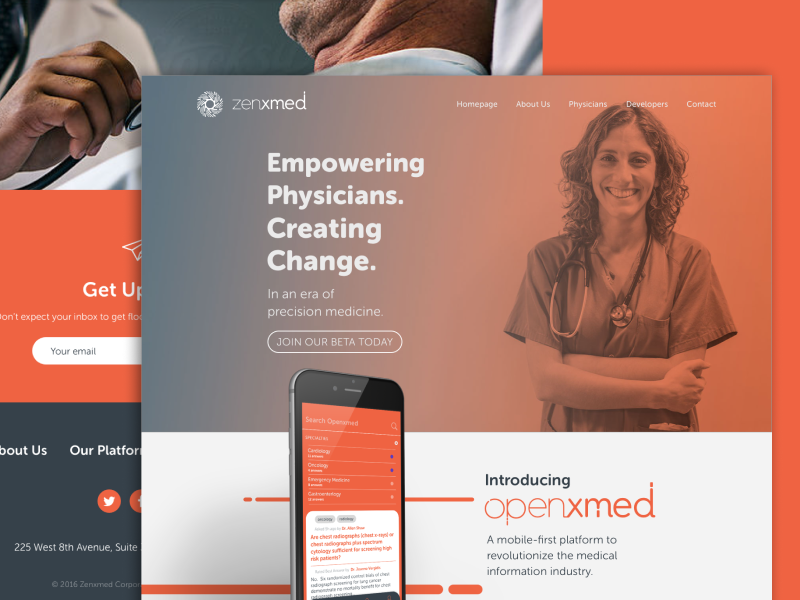
Zenxmed was founded by physicians who recognized the significant challenges in the healthcare sector, including rising costs and the overwhelming amount of constantly evolving medical information. Many practicing physicians struggled to keep up with best practices, further hindered by the limited support for their needs within the industry.
The founders envisioned a resource that would streamline access to essential information, allowing healthcare practitioners to make informed decisions in real-time, right at the point of care. This led to a clear mission for Zenxmed: to develop a user-centric platform that enhances decision-making and fosters collaboration among healthcare professionals.


User-Centered & Iterative Design
To bring our flagship product, OpenXMed, to life, we implemented a structured user-centred design process that included in-depth user research, iterative design sprints, and continuous testing. Our primary goal was to understand the real-world challenges, preferences, and behaviours of physicians in order to develop a platform that seamlessly integrates with their daily workflows.
We conducted interviews and surveys with our target users—physicians, medical residents, and students—to map their journeys and identify areas where OpenXMed could provide the most support. From these insights, we formulated two main hypotheses:
Hypothesis 1: Physicians who can swiftly navigate complex clinical guidelines will have greater confidence in their decisions, reducing the need for assumptions during the point of care.
Hypothesis 2: Implementing a contributor model instead of traditional authorship will encourage physicians to engage actively, fostering a collaborative environment that prioritizes accountability and shared medical knowledge.
An Intuitive Mobile Experience
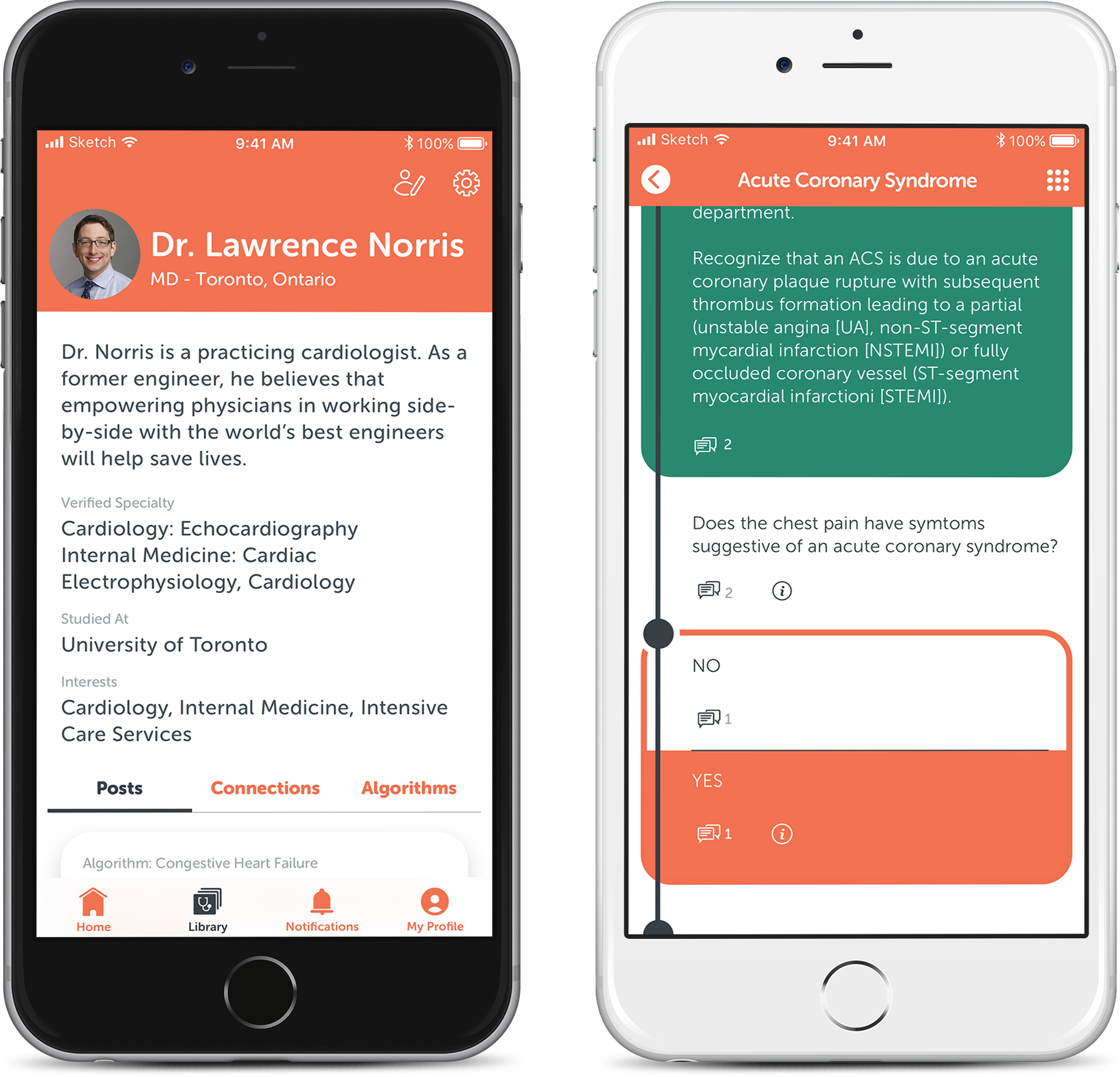
Our aim with the app was ensure that users were able to navigate through massive amount of content quickly, in a logical order based on decisions they would make when with a patient. A solution to this was to use a decision tree format.
This format allowed us to layer additional information and references in the content, reducing the cognitive load for the physicians at point-of-care.
Another key part of the platform was letting physicians comment on evidence, which helped medical students connect with peers and learn from practicing clinicians. User testing suggested this engagement could improve the algorithms over time, so we defined an analytics strategy to measure it.
Because most clinical decision tools lack meaningful peer interaction, we designed robust profiles that highlighted specialty, interests, and medical training to reinforce credibility. Our onboarding collected only what we needed to verify users, making core identity fields required and secondary details optional, and clearly explaining why we asked for this information.

Managing Content
Once we defined the mobile, point-of-care experience, we needed a backend to manage and deliver content.
We approached this in two phases. In phase one, we began creating algorithms without a CMS using draw.io and a standardized contributor format, targeting 100 algorithms in six months, while engineering started the first CMS iteration.
The CMS workflow was intentionally simple:
Build a topic list.
Assign each topic to a contributor and a medical lead.
Capture the required clinical details.
Provide a visual builder for algorithms.
Review, then publish to the app.
In phase two, the CMS MVP enabled us to migrate the phase one library into the platform, build algorithms directly in the system, and formalize the review process with an in-product notes and feedback loop.
Evaluating Success
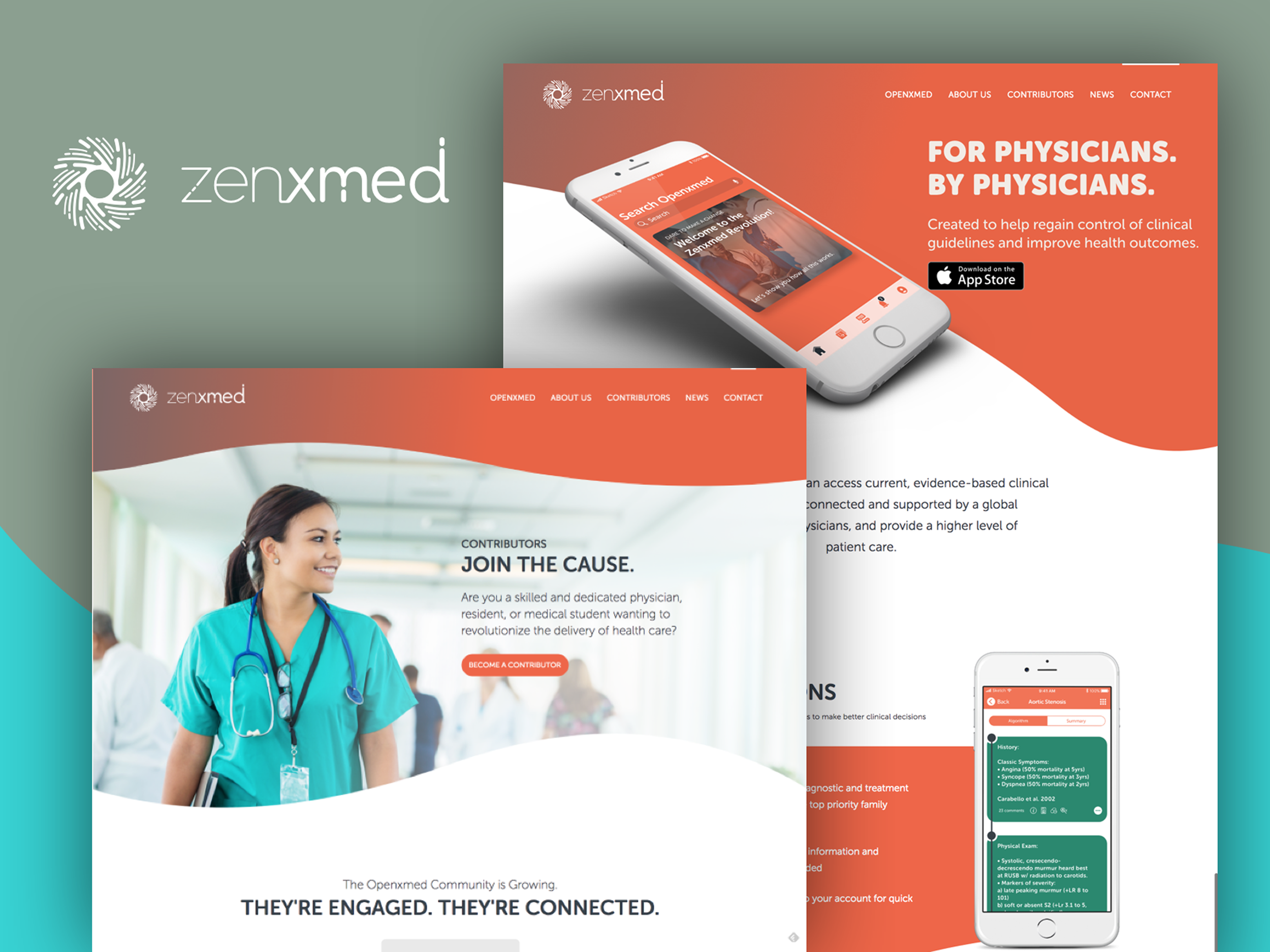
Usability: The decision-tree interface of OpenXMed provided physicians with an intuitive tool to access medical information efficiently, significantly reducing decision-making time at the point of care.
Collaboration: The shift to a contributor model promoted an environment of peer engagement, motivating users to participate actively in knowledge-sharing, which proved valuable for both experienced and aspiring medical professionals.
Scalability: Our two-phased CMS approach enabled Zenxmed to rapidly expand its content library and support ongoing contributions, establishing a strong foundation for future growth.