Meridian Design System
Building the Foundation for a Unified Experience

Build the foundation nobody knew was missingBefore Meridian, Assent's product experience was fragmented: inconsistent components, undocumented decisions, and teams reinventing foundational UI instead of solving user problems.
I led the creation of Assent's first design system from the ground up, establishing governance, a reuse-first culture, a component lifecycle, and a Design Guild that brought designers and engineers into genuine ongoing collaboration. Meridian is now the foundation every product surface is built on.
The Problem
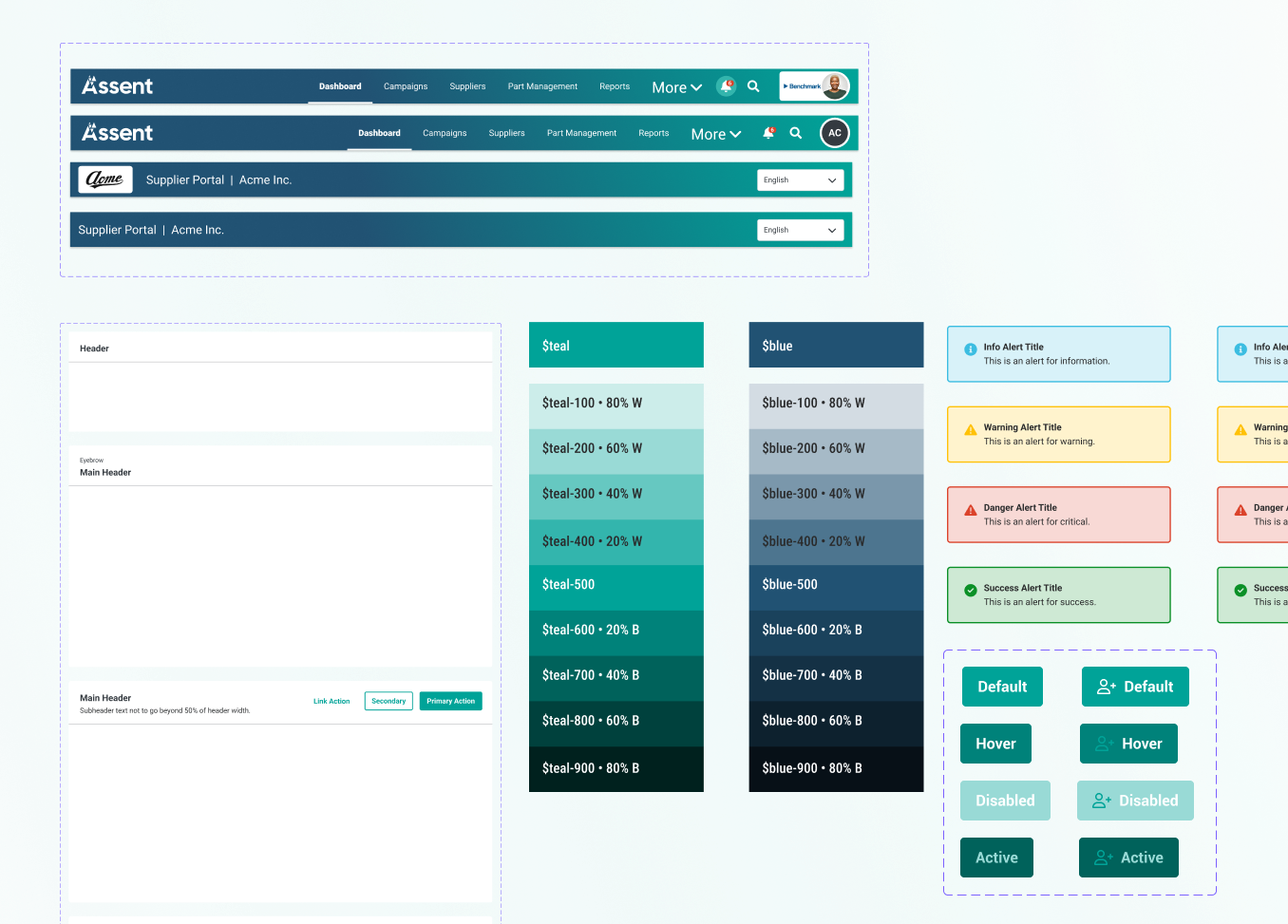
When I joined Assent in 2018, there was no design system. What existed was an outdated design guide buried inside the product design team. Nobody shared it. Nobody followed it.
The consequences compounded over years. Developers and designers built different versions of the same components. Over two dozen font styles. Scattered colour variations. One-off implementations with no documentation. No shared language between design and engineering for evaluating what was ready and what wasn't.
Teams were obsessing over pixels when they should have been obsessing over outcomes. Every new feature started from scratch. That's not a scaling strategy. That's design debt with a compound interest rate.
The Catalyst
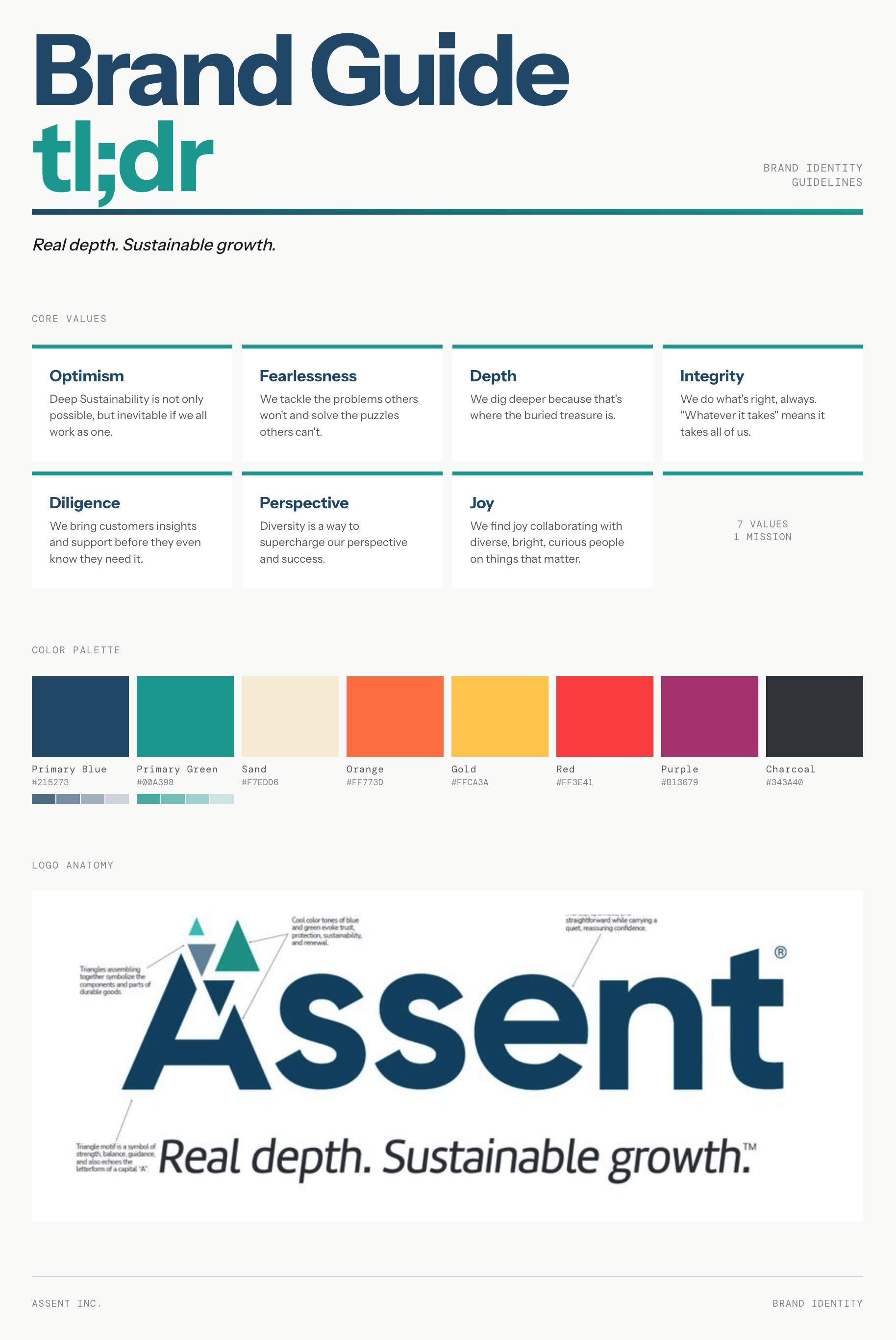
Assent closed a Series C round in late 2021 and launched a full rebrand to push into the European market. Most teams saw a cosmetic refresh. I saw a strategic opening.
Rather than reskinning what existed, I positioned this moment as the opportunity to build something foundational. Not a style guide. Not a component kit. A shared vision that would bring cohesion and clarity across every product surface.
I named it Meridian. The connector. The bridge. The path forward.
What Was Built
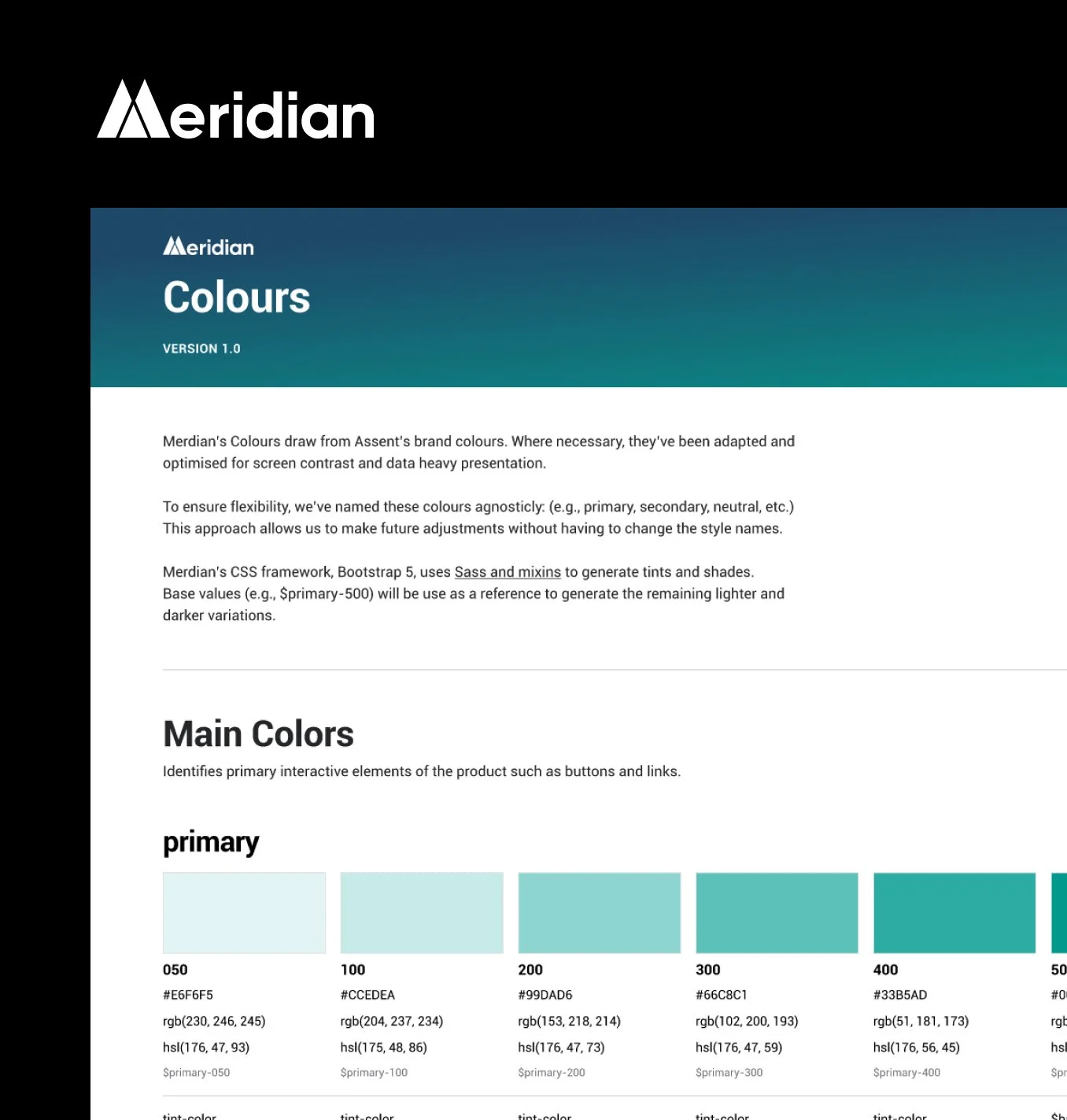
I aligned the entire product design team's workstream with the Platform UI mandate. Meridian was not a side project. It was the backbone of how we build.
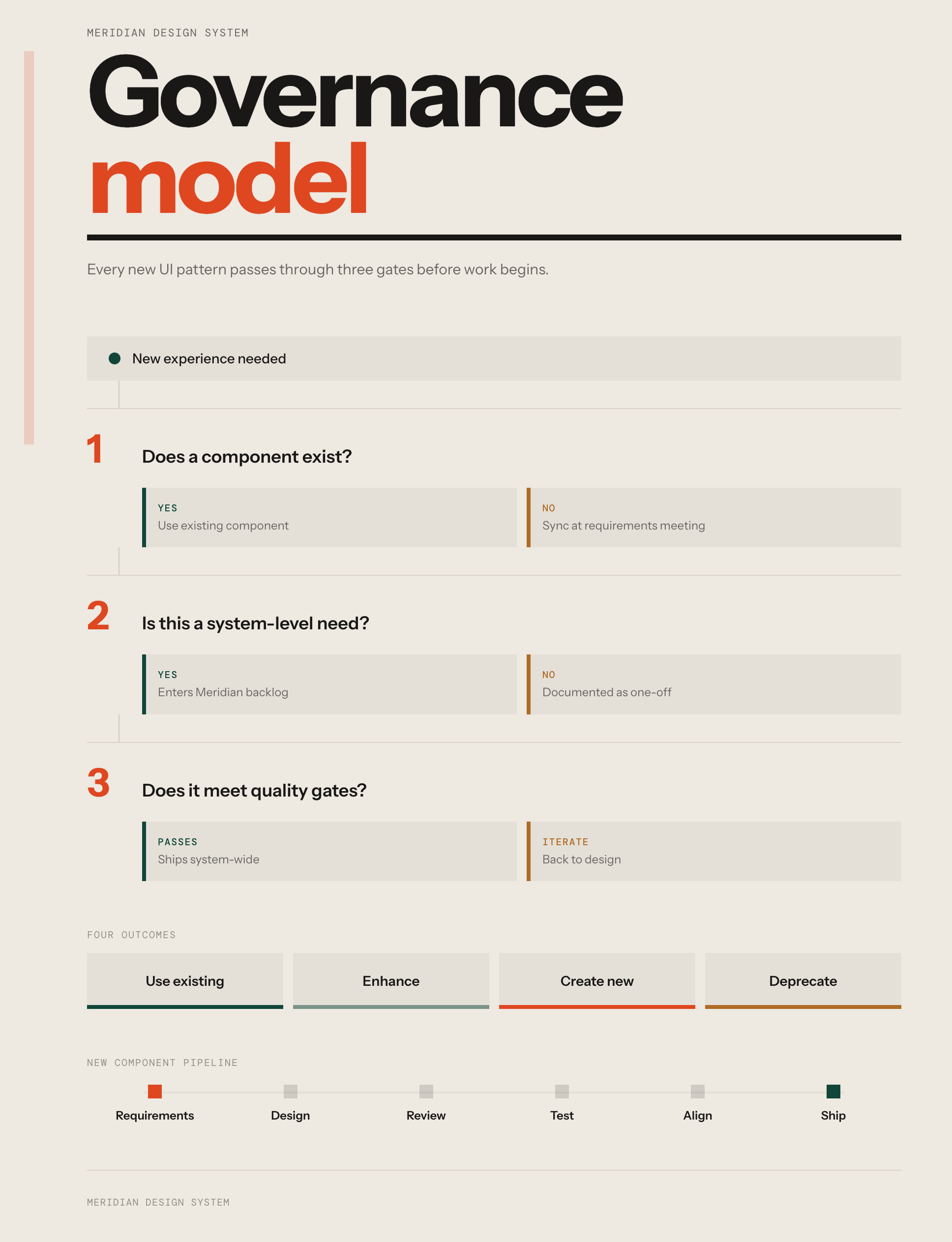
I defined the mission around what I called the Quest for Quality: building a world-class SaaS product that served as the tone-setter for a new chapter at Assent. I established a Reuse-First Approach as the governing principle for all new component work. When something new was needed, I required detailed proposals and rigorous review before anything got added.
This governance wasn't bureaucracy. It was the thing that had been missing for years: oversight, intentionality, and a shared standard.
Hands-On Implementation
I directed a comprehensive audit of every Figma component. Implemented a tagging system that tracked Design Status against Development Status in real time. This made the gap between design intent and code reality visible for the first time.
We then defined a standardized component lifecycle:
Planned
Under Exploration
Design In Progress
In Review
In Testing/Validation
Approved/Finalized
Out of Sync with Development
That last status mattered most. I focused the team on Reconciliation with Meridian Hub, ensuring what existed in Figma and what lived in the developer-facing Hub stayed aligned. Without that discipline, design systems drift. And once they drift, they lose credibility.
Culture, Not Just Components
I launched a Design Guild for continuous UI improvement across both disciplines. I hosted joint sessions between designers and developers to build shared understanding of constraints and possibilities.
These weren't ceremonial. They changed how the two teams talked about components, surfaced misalignment early, and gave developers direct input into the design process. The system worked because it belonged to everyone, not just design.
The Living System
By 2025, Meridian was no longer a project. It was an operating model.
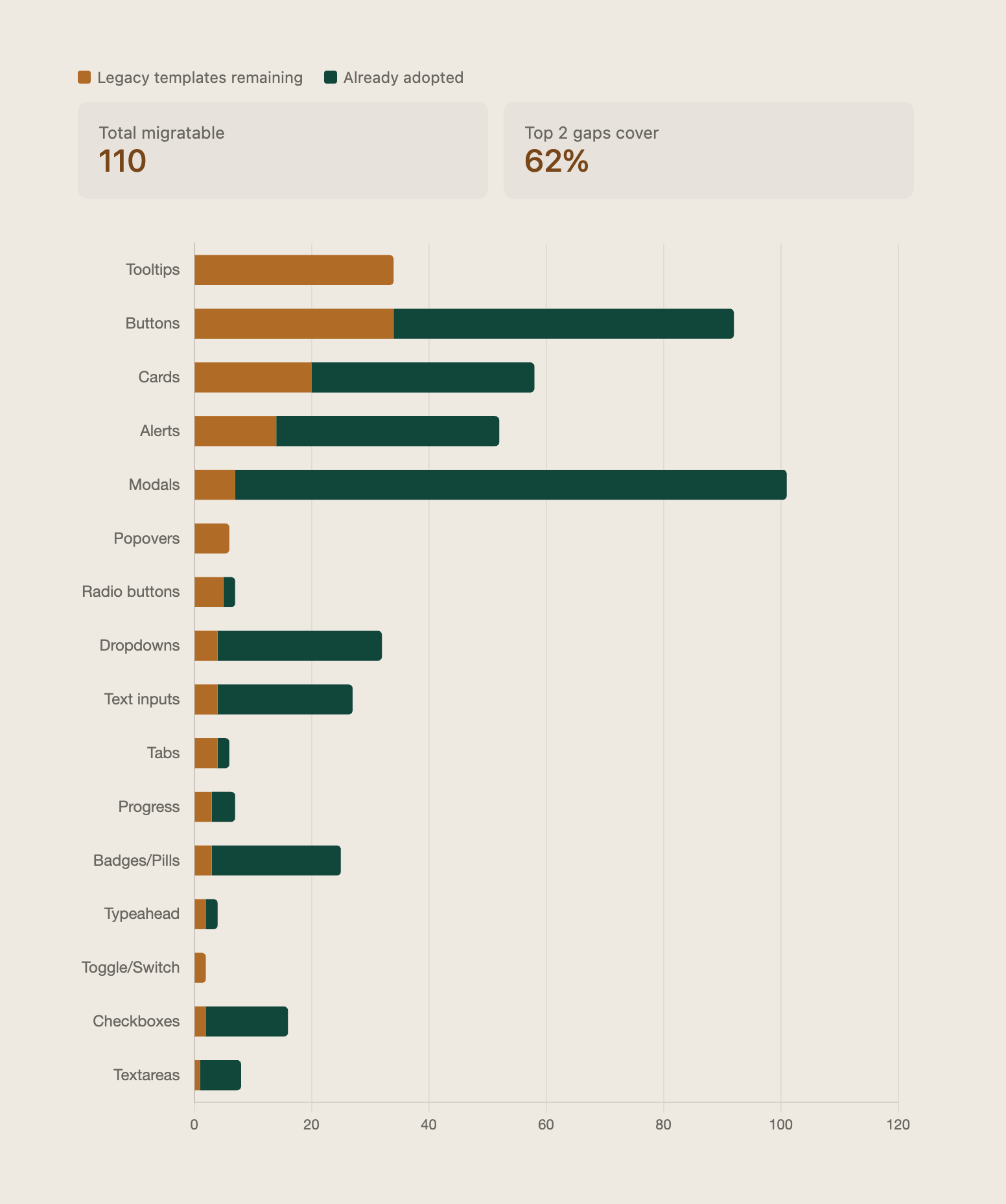
Platform UI was actively building reusable components: nested lists with drill-in navigation and status bubbling, enhanced breadcrumbs, multi-select grid support, error handling patterns, and a UI entitlement system integrated with feature flags. The governance process was documented in Confluence and actively used for every component decision.
There was a real tension between speed and consistency. I was transparent about that. The Platform UI mandate I helped shape took a pragmatic stance: Platform UI owned core components, other teams could extend or create new ones to maintain velocity. That was a deliberate trade-off, not a failure. Managing that tension, not eliminating it, was part of leading the system responsibly.
Impact
AI integration: UX pilot trained on 68 Meridian components; estimated 3–5 hours saved per designer per week
Governance adoption: formal Meridian process established and actively used (not shelf-ware)
Rebrand alignment: anchored consistent visual rebrand across product surfaces
Market signal: 2023 win/loss insights—UI/UX in top 5 decision drivers for Europe
Component growth: continued development through 2026 (nested lists, breadcrumbs, error handling, entitlements + feature flags)
Team focus shift: moved from pixel reinvention to solving complex user problems
Designer–developer alignment: Design Guild + ongoing joint sessions created shared language and accountability
What I Learned
A design system is a cultural artifact as much as a technical one. The Figma files mattered. The component library mattered. But what made adoption real was the governance, the Design Guild, the cross-team rituals, and the shared language between disciplines.
We never had a dedicated design systems team in the traditional sense. That constraint forced us to make Meridian a shared investment, empowering other teams to contribute rather than centralizing ownership into a bottleneck. The roadmap and the governance gave people something to buy into. Meridian became theirs, not just ours.
Building a design system at a growth-stage B2B SaaS company during a rebrand, across a complex multi-product platform, with no prior system in place. That was the hard version of this problem. It worked because I treated it as a strategic mandate from day one, not a project with an end date.